
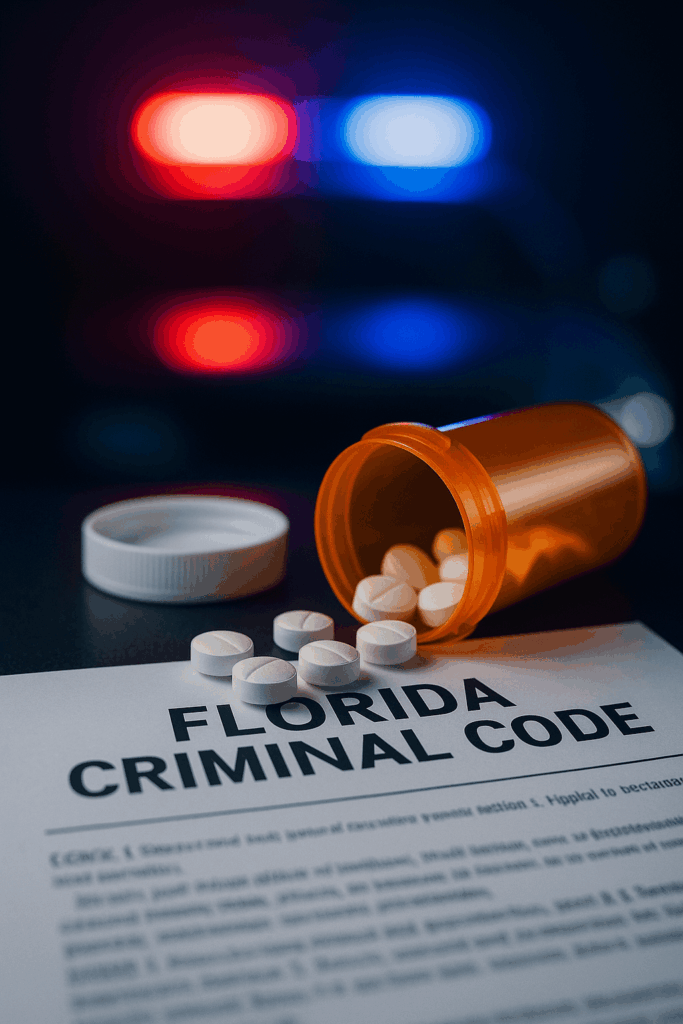
Florida Drug Charges Attorney | Possession, Trafficking, and Defense Strategies
Drug charges in Florida are serious offenses that can carry severe penalties. Florida has strict laws designed to deter the possession, use, distribution, and manufacturing of controlled substances. Whether you are facing a misdemeanor or a felony, understanding the basics of Florida drug charges is critical—because a conviction can mean jail or prison time, steep fines, probation, and a permanent criminal record that can impact your future employment, housing, and professional opportunities.
This overview explains common Florida drug charges, how penalties can escalate based on the type and amount of the substance, and why early, aggressive legal representation matters.
Common Drug Charges in Florida
Drug cases are fact-specific. The penalties depend on the substance, the amount involved, your prior history, and how the state claims the drugs were used or possessed. Common charges include:
- Possession of a controlled substance: Allegations that you possessed illegal drugs for personal use. Severity depends on the drug type and amount. Small amounts of marijuana may be charged as a misdemeanor, while many other controlled substances are felony-level possession even at low weights.
- Possession with intent to sell or deliver: If law enforcement believes the drugs were intended for sale rather than personal use, prosecutors may file enhanced charges. Indicators often include the quantity, packaging materials, scales, ledgers, or cash.
- Drug trafficking: One of the most serious charges. Trafficking often turns on weight thresholds and can trigger mandatory minimum prison sentences—sometimes regardless of intent.
- Manufacturing of drugs: Allegations involving production or cultivation of controlled substances (for example, operating a meth lab, growing marijuana, or synthesizing controlled substances).
- Drug paraphernalia: Possession of items used to consume, produce, or distribute drugs (pipes, syringes, scales, baggies, etc.). These are often filed alongside other charges and can still create significant consequences.
Why Fighting Drug Charges Matters
Drug charges can have life-changing consequences beyond the courtroom. A conviction can create long-term collateral damage, including barriers to jobs, housing, school admissions, professional licensing, and (for non-citizens) immigration consequences. Because the stakes are high, treating a drug case as “minor” is a mistake.
The smartest move is to build a defense strategy early—before statements are made, evidence is locked in, or plea offers are accepted without fully understanding the long-term cost.
Florida Drug Possession Penalties by Amount
Penalties often increase dramatically based on the type and weight of the alleged substance. The chart below provides a general reference point for common thresholds discussed in Florida drug cases.
| Drug Type | Amount | Charge Level | General Penalty Exposure |
|---|---|---|---|
| Cannabis | Under 20 grams | Misdemeanor (common classification) | Up to 1 year jail and fines (depends on charge filed) |
| Cannabis | Over 20 grams | Felony exposure (commonly alleged) | Higher penalties, probation risk, felony record |
| Cocaine | Under 28 grams | Felony exposure | Up to 5 years prison (depending on charge filed) |
| Cocaine | 28+ grams | Trafficking exposure | Mandatory minimum prison risk (weight-based) |
| Heroin / Fentanyl | Under 4 grams | Felony exposure | Prison/probation exposure depending on facts |
| Heroin / Fentanyl | 4+ grams | Trafficking exposure | Mandatory minimum prison risk (weight-based) |
| Methamphetamine | Under 14 grams | Felony exposure | Prison/probation exposure depending on facts |
| Methamphetamine | 14+ grams | Trafficking exposure | Mandatory minimum prison risk (weight-based) |
Important: Trafficking allegations are often driven by weight alone. In many situations, prosecutors can pursue trafficking even when the defense position is “personal use,” which is why early legal intervention is critical.
Understanding Florida Drug Trafficking Thresholds
Florida trafficking law can trigger mandatory minimum prison sentences based on the weight of the alleged controlled substance. These cases move fast, and the difference between a possession filing and a trafficking filing can be the difference between probation eligibility and mandatory prison exposure.
- Cannabis: Commonly discussed at 25 pounds or 300+ plants
- Cocaine: Commonly discussed at 28 grams or more
- Heroin / Fentanyl: Commonly discussed at 4 grams or more
- Methamphetamine: Commonly discussed at 14 grams or more
- MDMA: Commonly discussed at 10 grams or more
Judges generally cannot sentence below mandatory minimums unless very specific legal exceptions apply. That makes it essential to attack the state’s evidence early—especially the stop, the search, the testing, and the chain of custody.
Common Defenses to Florida Drug Charges
A strong defense often focuses on whether the state can lawfully use the evidence and whether it can actually prove the required elements beyond a reasonable doubt. Common defense angles include:
- Illegal search and seizure: If law enforcement searched a vehicle, home, or person without legal justification (or exceeded a warrant’s scope), evidence may be suppressed.
- Constructive possession challenges: When drugs are found in a shared space, the state must prove knowledge and control—mere presence is not enough.
- Lack of knowledge: If you did not know the substance was present or did not know it was illegal, that can undermine the state’s case in specific fact patterns.
- Crime lab and chain-of-custody issues: Testing errors, contamination, or documentation gaps can weaken reliability and admissibility.
- Reduction strategy: In some cases, the most practical win is reducing a trafficking allegation to a non-mandatory charge where sentencing options expand significantly.
Drug Court and Diversion Programs
In many Florida counties, eligible defendants may have options that focus on treatment and rehabilitation rather than incarceration. These programs vary by county and prosecuting agency and often require compliance with counseling, testing, and court check-ins.
- Drug Court: Often a structured treatment program that can lead to reduced charges or dismissal depending on the program terms and completion.
- Pretrial diversion: In some situations, first-time or low-level offenders may be eligible for diversion resulting in dismissal upon successful completion.
Eligibility is not automatic. A defense attorney’s job is to evaluate whether diversion is realistic and to position the case to maximize leverage—especially by challenging unlawful searches or evidentiary weaknesses.
Drug Charges in Florida FAQ
What’s the difference between possession and trafficking in Florida?
Possession cases typically involve smaller amounts and do not automatically trigger mandatory minimum prison sentences. Trafficking is often weight-driven and can trigger mandatory minimums even when the allegation is not “intent to sell.” The exact thresholds depend on the substance involved.
Can drug charges be dismissed if police searched my car or home illegally?
Potentially, yes. If the search violated constitutional protections, a court may suppress the evidence. When the state loses its key evidence, dismissal or a significant reduction often becomes possible.
Can I be charged if drugs were found in someone else’s car or house?
Yes, prosecutors may try to prove “constructive possession,” but they must show you knew about the drugs and had the ability to control them. In shared-space cases, defenses can be strong when proof of knowledge or control is weak.
Will I go to prison for a first-time possession charge?
Not always. Outcomes vary by county, the facts, and the charge filed. Some first-time cases are resolved through diversion, drug court, reduced charges, or probation—especially when a defense is developed early.
Talk to a Florida Drug Defense Attorney
Drug cases can turn on a handful of critical details: why you were stopped, whether the search was lawful, who actually possessed the alleged substance, and whether the state can prove its case with admissible evidence. If you are facing drug charges in Florida, the decisions you make early can shape the entire outcome.
Free confidential consultation: (727) 275-9575
Statutory references for general information: Fla. Stat. Ch. 893 (Controlled Substances) and Fla. Stat. § 893.135 (Trafficking). This content is for informational purposes only and does not constitute legal advice. Program availability and eligibility vary by county and prosecuting agency.